

The International Organization for Standardization (ISO) has published a new white paper examining how the specific characteristics of healthcare influence the development, evaluation and implementation of artificial intelligence (AI). The report provides valuable insights for researchers and innovators working on AI-driven solutions in personalised medicine.
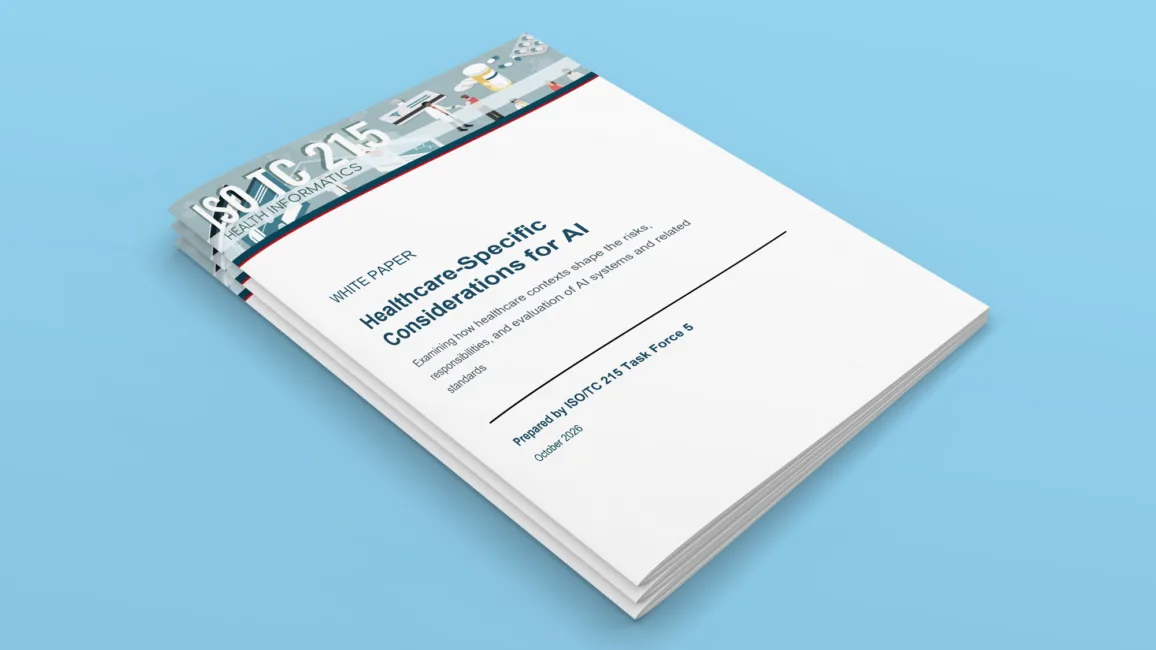
The white paper, “Healthcare-Specific Considerations for AI”, was developed by Task Force 5 – AI Technologies in Health Informatics within ISO Technical Committee 215 (ISO/TC 215). Published in October 2026, it explores how established AI principles such as fairness, safety, transparency, human oversight, accountability and data governance need to be interpreted and applied in healthcare settings.
While general AI standards provide important foundations for the development and governance of AI technologies, healthcare presents distinct challenges. Clinical decisions can have significant consequences for patient safety and treatment outcomes, health data are particularly sensitive, and AI applications must operate within complex clinical workflows and regulatory environments. The report examines these challenges and provides a shared conceptual foundation to support greater consistency between general AI standards and healthcare-specific requirements and practices.
Relevance for Personalised Medicine
Artificial intelligence plays an increasingly important role in personalised medicine, enabling the analysis of complex and multimodal health data, the identification of biomarkers, disease prediction and the development of clinical decision-support systems. The new white paper addresses several considerations that are particularly relevant for researchers and innovators developing such solutions.
One important aspect is fairness in clinical decision-making. While fairness is a fundamental principle of trustworthy AI, healthcare often requires different approaches for patients with different clinical characteristics and needs. The report therefore emphasises the importance of distinguishing clinically justified differentiation from bias caused by unrepresentative training data, inappropriate proxy variables or existing inequalities in healthcare.
Another key consideration is clinical validity and safety. Strong technical performance does not necessarily guarantee that an AI application is clinically appropriate. AI systems must be evaluated in relation to their intended purpose, patient populations and clinical settings. Their performance may also change when deployed in different healthcare environments, highlighting the importance of ongoing monitoring and evaluation.
The report further highlights the importance of meaningful human oversight and patient participation. AI-based recommendations should support clinical judgement while enabling patients to understand how AI contributes to decisions about their care, including relevant uncertainties and available alternatives.
Finally, the white paper examines challenges related to health data governance, interoperability and accountability. These are particularly relevant for personalised medicine approaches that integrate clinical, genomic and other health data across different organisations and healthcare systems.