

At the joint ICPerMed and EP PerMed conference in Prague, we discussed the growing significance of biobanks, genetic data and polygenic risk scores with Andres Metspalu. He believes these are some of the most innovative medical technologies currently available for transforming healthcare through personalised medicine.
Short Version (1m50s)

Long Interview (7m26s)
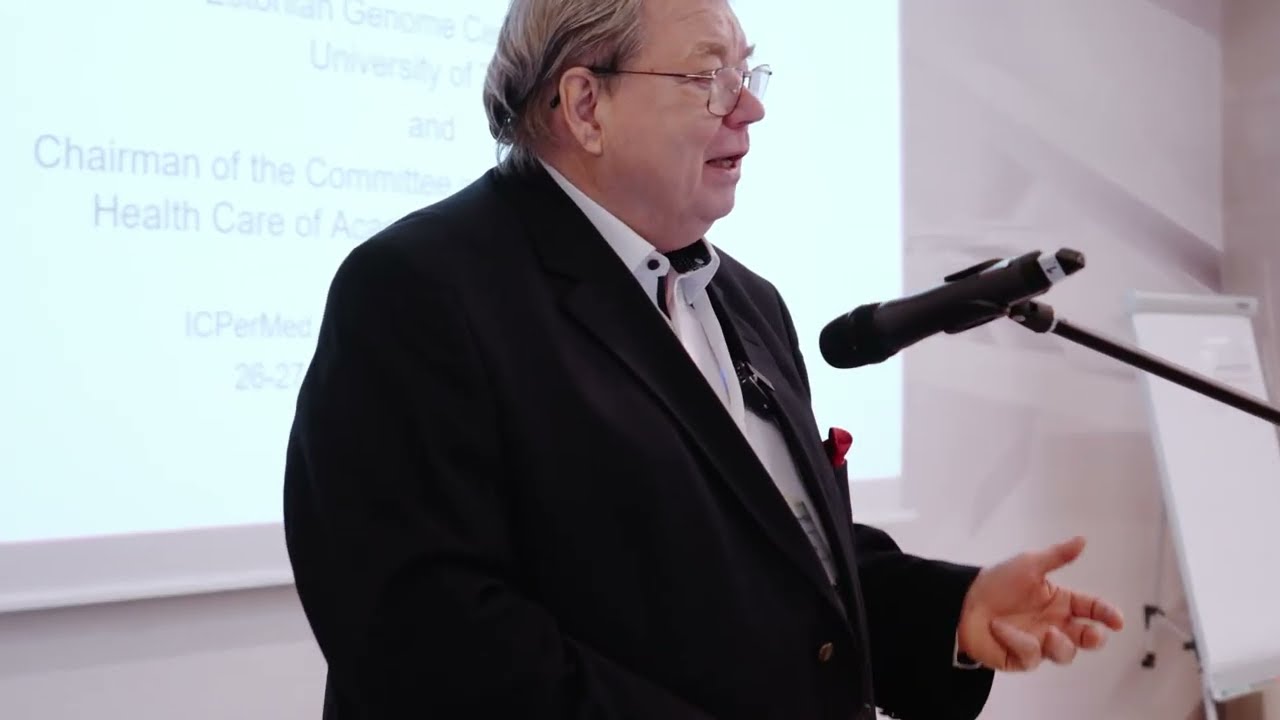
Andres Metspalu is a professor at the Institute of Genomics and the Institute of Molecular and Cell Biology at the University of Tartu. In our video interview, he discusses the growing significance of biobanks and genetic data in transforming healthcare through personalised medicine, with a particular focus on primary care and disease prevention. He emphasises that polygenic risk scores are one of the most innovative medical technologies currently available. These scores predict an individual’s risk of developing various diseases by analysing multiple genetic markers, enabling early detection and personalised prevention strategies. The aim is to shift the focus of healthcare from reactive secondary and tertiary care to primary prevention, where interventions are based on a person’s unique genetic risk profile.
Read more about the joint ICPerMed & EP PerMed Conference here, where you can also watch all the other interviews and access the slides and recordings.
In the video, Andres mentions a personalised breast cancer screening programme based on polygenic risk scores (PRS) that is set to be implemented in Estonia for all women aged 40 and over in 2026. The project behind it was recently awarded the title “Best Practice” in Personalised Medicine by EP PerMed. You can read all the programme details here: Genetics-based Personalised Breast Cancer Prevention and Screening