

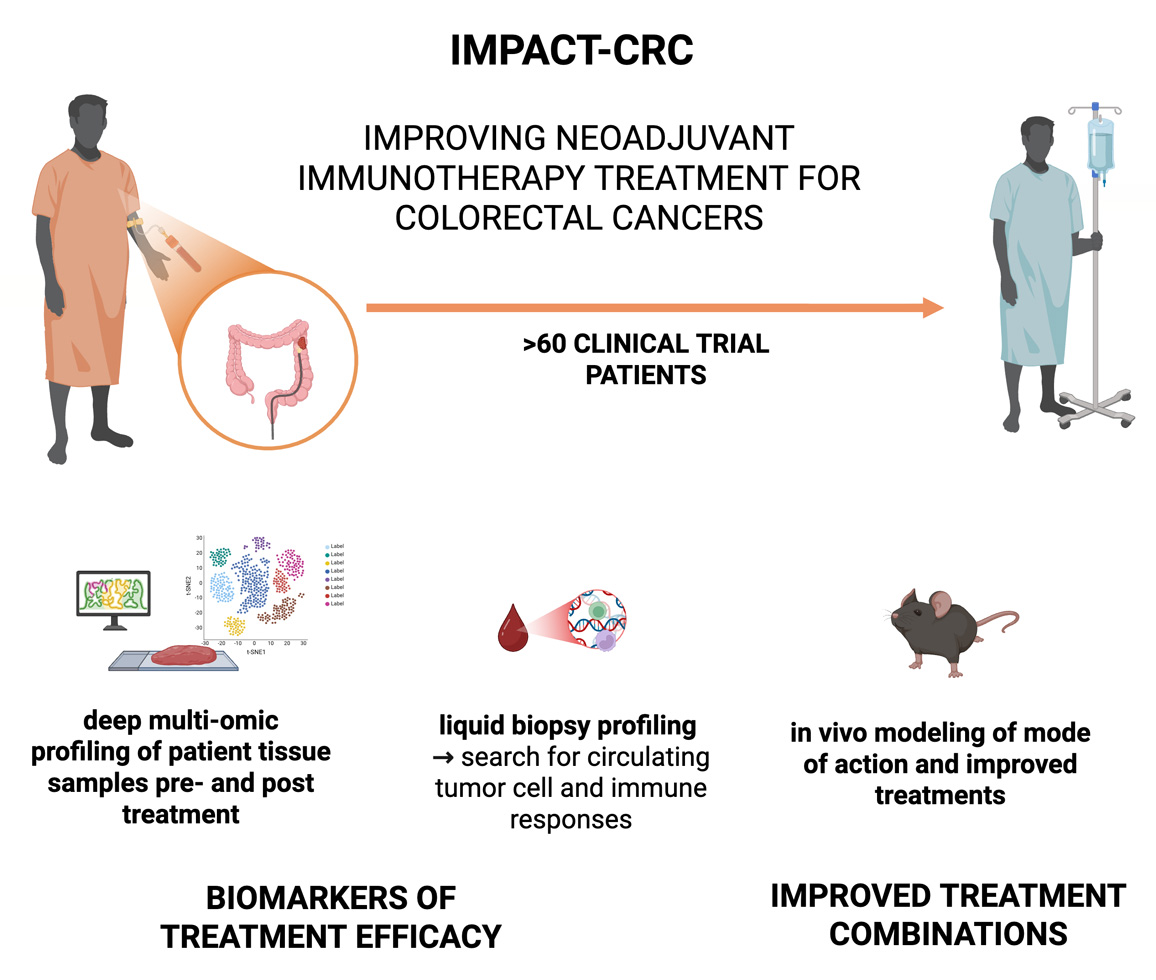
IMPACT-CRC is tackling one of the toughest challenges in colorectal cancer: helping patients with microsatellite-stable (MSS) tumours benefit from immunotherapy, a treatment that has so far worked for only a small minority of them.
To understand why some patients respond and others don’t, the project brings together two patient groups, one from a previous study and one from an ongoing clinical trial, who received next-generation immune checkpoint inhibitors. From these patients, researchers will collect a rich mix of biological information: the genetics of the tumour, how genes are switched on or off, the behaviour of individual cells, the structure of the tumour environment, and even fragments of tumour DNA that circulate in the bloodstream.
A central goal is to watch the “conversation” between the tumour and the immune system unfold in real time. To do this, the team will closely track T-cell receptors (the molecular fingerprints of key immune cells) using deep sequencing. At the same time, they will monitor tumour DNA in blood samples during treatment, allowing them to detect early signs of tumour evolution or resistance long before scans would show it. To confirm their discoveries, scientists will also use mouse-derived organoids which are patient-like tumours grown in the lab that can be treated with the same drugs.
All of this information will be woven together using advanced AI and machine-learning tools to pinpoint clear, reliable biomarkers that can guide truly personalised immunotherapy helping doctors predict who will respond, who may not, and who might face side effects.