

EP PerMed awardes the title of “Best Practice” (BP) in Personalised Medicine to the national paediatric screening programme of familial hypercholesterolemia in Luxembourg as an example of successful implementation of a personalised prevention.
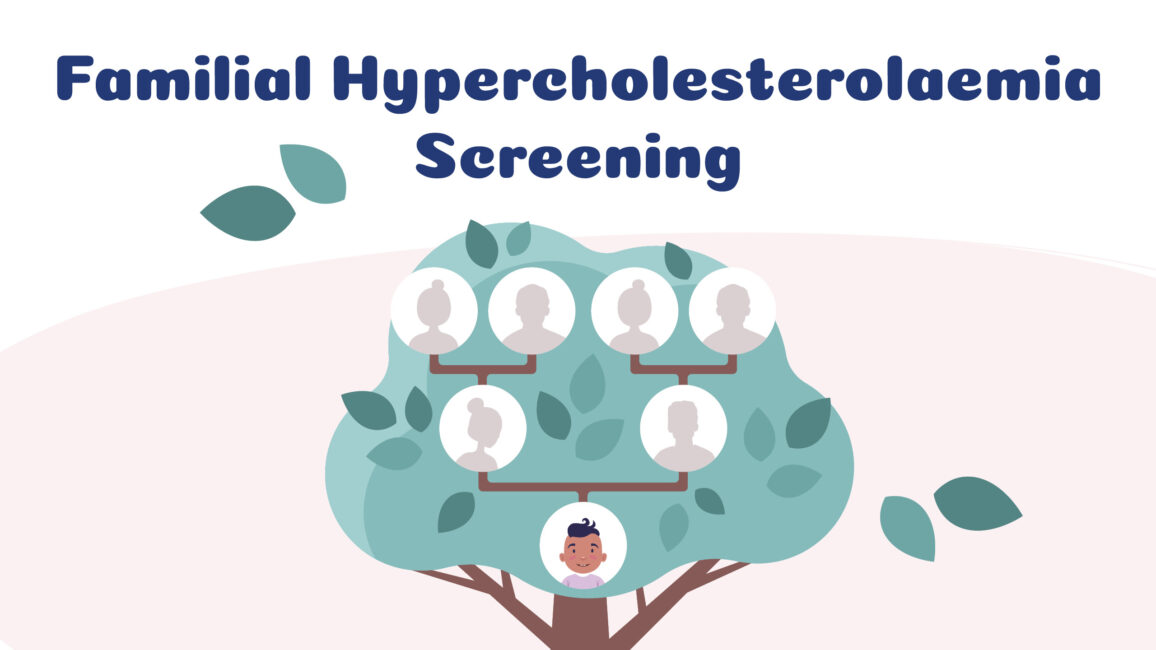
What is Familial Hypercholesterolemia?
Familial hypercholesterolemia (FH) is one of the most common hereditary diseases. It affects about 1 in 300 people in its heterozygous form and between 1 in 250,000 and 1 in 360,000 in its homozygous form. It is a condition that results in an excessively high level of cholesterol in the blood, particularly LDL (Low-Density Lipoprotein Cholesterol, known as “bad cholesterol”).
Individuals with familial hypercholesterolemia are at higher risk of developing cardio-neurovascular diseases such as myocardial infarction or stroke at a young age (between 20 and 40 years). Hypercholesterolemia often remains asymptomatic until a cardiovascular event occurs. A recent publication estimated that only 10% of affected patients are diagnosed and treated1.
However, if hypercholesterolemia is diagnosed and treated in childhood, vascular damage can be prevented. A safe and well-tolerated medication is available from the age of 6.
The Luxembourgish familial hypercholesterolemia (FH) screening programme aims to:
- Identify children with familial hypercholesterolemia.
- Initiate appropriate therapeutic measures early to reduce the risk of premature death and ischemic cardiovascular events.
- Perform cascade screening for FH among first-degree relatives of patients diagnosed with familial hypercholesterolemia.
This programme is part of a broader European initiative aimed at improving early detection and management of familial hypercholesterolemia (FH) through systematic paediatric screening. This approach aligns with the objectives outlined in the 2022 Prague Declaration: ‘The Time is Now’ which calls for urgent action to implement FH screening programmes across Europe. The declaration emphasises collaboration between policymakers, healthcare professionals, and patient organisations to overcome barriers and ensure equitable access to screening.
The introduction of these tests is an investment in the nation’s health, aiming to reduce cardiovascular mortality and raise awareness of silent genetic risks.
Martine Deprez, Minister of Health and Social Security, and Dr. Marianne Becker, endocrinologist at the Centre Hospitalier de Luxembourg (CHL)
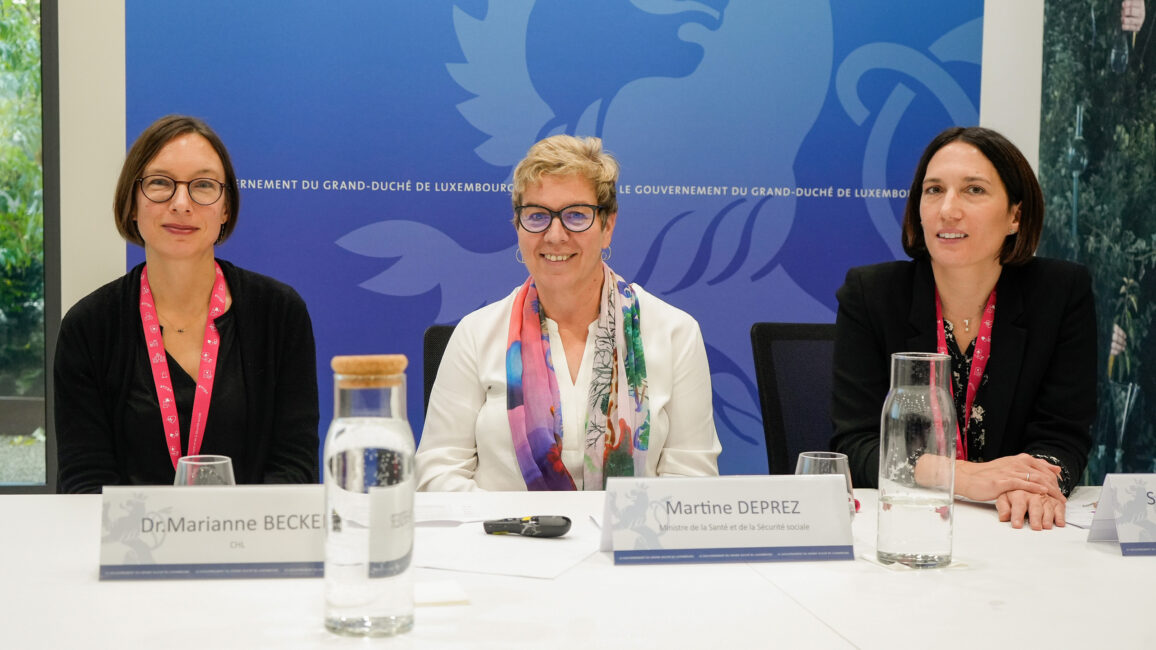
© Tina Leurs/Ministry of Health and Social Security
How will this programme roll out?
The official launch of the programme was in November 2025. Currently different steps are being implemented:
- Step 1: Invitation of children for screening
A personalised letter is sent to families residing in Luxembourg, inviting them to make an appointment for familial hypercholesterolemia screening at one of the Medical Centres in Luxembourg. Families not residing in Luxembourg may also participate in the screening but must submit a request via MyGuichet. - Step 2: Appointment booking by parents/legal guardians via MyGuichet.lu.
- Step 3: Conducting the familial hypercholesterolemia screening
Upon welcoming the children, the healthcare staff inform the accompanying person about familial hypercholesterolemia, the screening process, and how the sample will be collected. The test is performed using a capillary blood sample taken from the child’s fingertip. - Step 4: Transmission of results
The sample is analysed immediately on site. Once the analysis is complete, the result is displayed directly on the device. Results are communicated both orally and in writing and explained to the child’s accompanying person. - Step 5: Guidance for the child
The guidance provided to the child and their accompanying person depends on the screening result.
In parallel other complementary actions to ensure the successful implementation of the programme are being carried out: - Training of healthcare professionals to ensure consistent patient care.
- Implementation of a secure system for appointment scheduling.
- Awareness-raising among healthcare professionals and families through the website santesecu.lu, information campaigns, press conferences, and more.
What are the future plans?
Evaluation: A one-year pilot phase will allow for an analysis of the results and adjustments to the process if necessary.
Expansion: Expansion of the screening program to the north of the country with the addition of a Medical Centre in Ettelbruck.
What is the impact of this initiative for patients, for the healthcare system and for the advancement of personalised medicine?
The implementation of FH screening in Luxembourg has a major impact on public health and personalised medicine. FH is a genetic condition that significantly increases cardiovascular risk if left untreated. Early screening enables the introduction of personalised prevention strategies, including appropriate lipid-lowering treatments and targeted advice.
For citizens/patients: when detected early, familial hypercholesterolemia can be treated with medication that lowers cholesterol levels, thereby preventing cardiovascular disease and premature death in adulthood.
If FH is detected in a child, screening will also be offered to first-degree relatives (father, mother, brothers, and sisters) to check whether they might unknowingly have the same condition. Appropriate care can then be provided to them as well. Since FH is inherited in an autosomal dominant manner, there are almost always further family members affected.
For the healthcare system: Preventing cardiovascular events reduces long-term costs associated with chronic diseases. It also helps avoid workforce reduction due to premature death or disability preventing a return to work.
An important psychological aspect is that this screening increases the likelihood that children grow up with both parents alive.
How does the programme collaborate with academia, private partners and/or health care providers in order to ensure its implementation in clinical practise and in the healthcare system?
The rollout of FH screening is based on close collaboration between several stakeholders:
- General practitioners, paediatricians, and healthcare professionals have received training to identify at-risk patients and refer them for screening.
- Collaboration with research physicians at Centre Hospitalier de Luxembourg (CHL), who ensure the scientific evaluation of the project.
Does this project address ethical considerations, data protection and gender and diversity aspects?
Yes, several dimensions are involved:
- Patient engagement: Screening is based on a voluntary and informed approach. Patients and their families are involved from the outset, with clear materials explaining the benefits, risks, and implications of the test (invitation letter, flyer, video, etc.).
- Health economics: Early screening for familial hypercholesterolemia helps reduce long-term costs associated with severe cardiovascular complications (heart attack, stroke). “Synthesised economic evidence on the cost-effectiveness of screening familial hypercholesterolemia.” Global Health Research and Policy, 2024. DOI: 10.1186/s41256-024-00382-x
- FH Europe (patient organisation) strongly supports the implementation of national screening programmes for familial hypercholesterolemia (FH).
The programme ensures universal access, regardless of socio-economic status, gender, or place of residence:
- Standardised protocols for all children.
- Multilingual information materials (French, German, Portuguese, English) to reach a diverse population.
- Access to screening for both Luxembourg residents and non-residents who are in possession of a Luxembourg social security number.
- Wilemon KA, Patel J, et al., Representatives of the Global Familial Hypercholesterolemia Community. Reducing the clinical and public health burden of familial hypercholesterolemia: a global call to action. JAMA Cardiol 2020; 5:217–29 ↩︎