

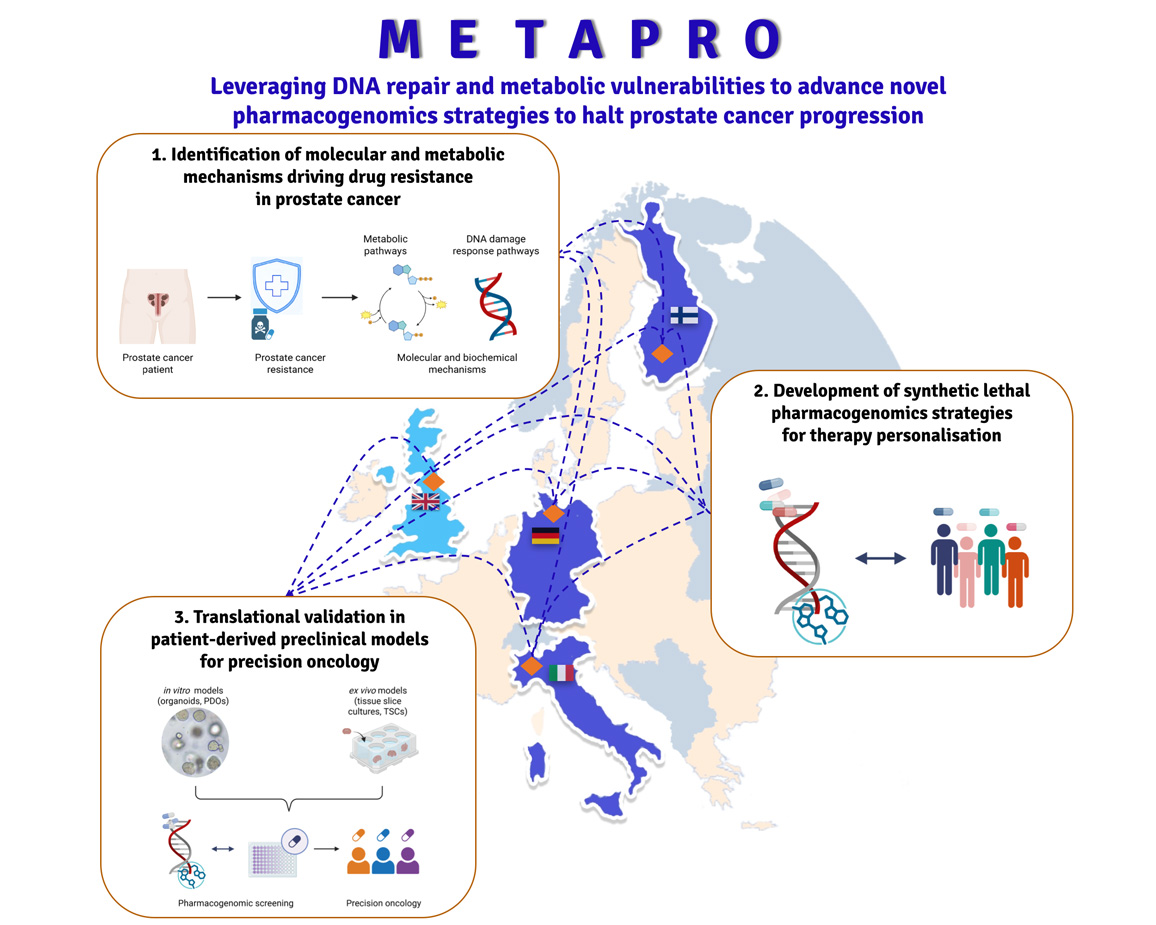
Prostate cancer is one of the most prevalent malignancies in men worldwide. Although early detection and treatment of localised disease have improved survival, metastatic prostate cancer at diagnosis and relapses after first-line therapies remain major clinical challenges. Therapeutic resistance and tumour heterogeneity further hinder effective disease management.
The METAPRO project aims to identify novel synthetic-lethal, pharmacogenomics-based strategies to prevent disease progression and to improve patient selection for targeted therapeutic interventions. Targeting synthetic-lethal interactions within the DNA damage response pathway, extending beyond PARP inhibition, as well as key metabolic vulnerabilities, may enable the development of synergistic drug combinations with manageable toxicity and durable clinical benefit. In parallel, the establishment of functional and molecular assays to unveil tumour-specific vulnerabilities will be essential for refining patient stratification and optimising therapeutic strategies.
The project is organised around three key objectives:
- to elucidate the molecular and metabolic mechanisms driving acquired resistance to conventional and novel therapies;
- to design personalised pharmacogenomics strategies informed by experimentally defined synthetic-lethal interactions; and
- to validate these approaches in clinically relevant, patient-derived models to support future clinical translation.
Experimental workflows will integrate preclinical in vitro models with acquired drug resistance, CRISPR-engineered cell lines, and patient-derived ex vivo tumour slices and organoids.
This international, multidisciplinary consortium brings together clinical, preclinical, and computational expertise to advance precision pharmacogenomics in prostate cancer, ultimately contributing to more personalised and effective therapeutic options.
The consortium is still under contract negotiations and changes may occur.