

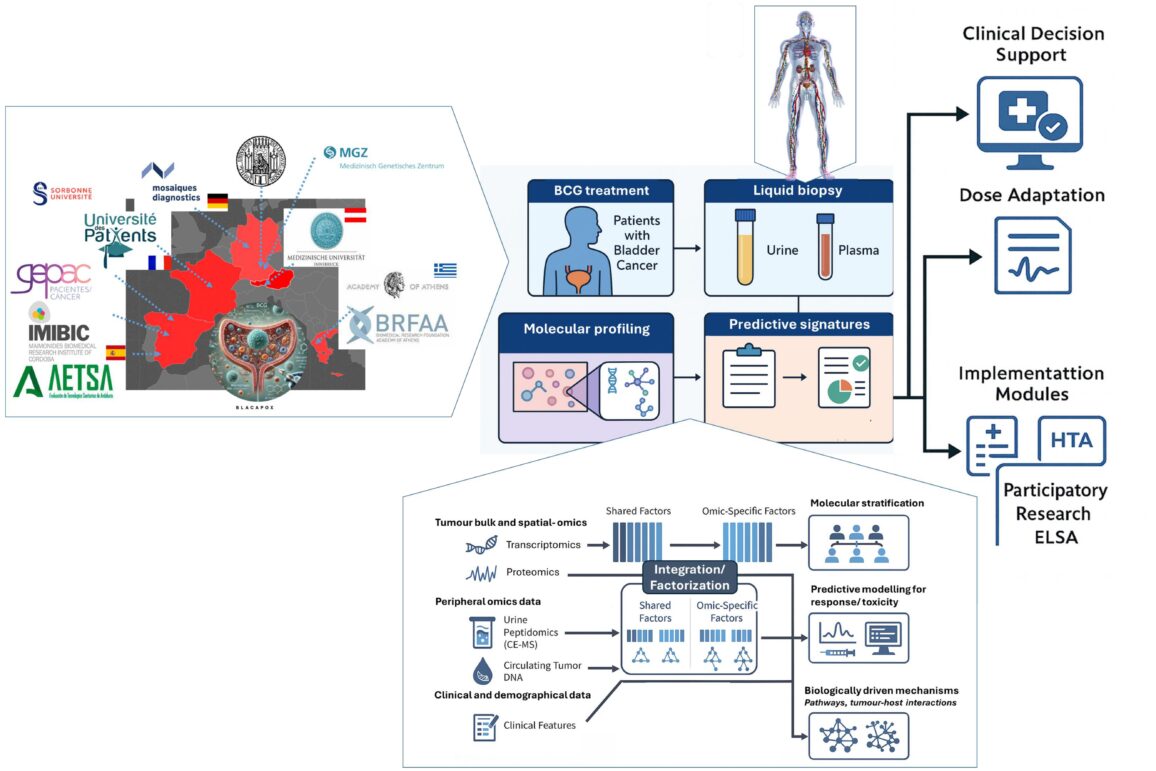
The BlaCaPOx project aims to develop a novel “pharmaco-omics” approach that uses multiple types of biological information – such as genes, proteins, and immune markers – to guide personalised treatment for patients diagnosed with Bladder Cancer. Bladder cancer that has not grown into the muscle, called non-muscle invasive bladder cancer (NMIBC), is commonly treated with Bacillus Calmette-Guérin (BCG), a type of immunotherapy administered directly into the bladder. Although BCG has been used for decades, patients respond very differently to it. Some benefit greatly, while others experience treatment failure and strong side effects. Current dosing decisions rely mainly on symptoms, and global BCG shortages have intensified the need for smarter, personalised use of the treatment.
By combining large existing datasets with newly generated information from bladder tissue and urine samples, the BlaCaPOx project will identify molecular signatures that predict how well a patient will respond to BCG, or whether they are likely to develop side effects. Using advanced bioinformatics and machine-learning methods, BlaCaPOx will build models that help clinicians adjust BCG doses.
Special emphasis will be placed on identifying molecular signatures through non-invasive liquid biopsy assays, enabling efficient and easily repeatable sample collection. A feasibility study will test these assays in real time.
Patient organisations, healthcare professionals, and policy experts will work together to ensure that the BlaCaPOx personalised approach is ethical, cost-effective, and ready for future integration into clinical guidelines. Ultimately, BlaCaPOx aims to make bladder cancer care safer, more effective, and more responsive to individual patient needs.